Connect instruments, devices and systems to LabMission
Plate readers, freezers, sensors, robots, couriers, and the LIMS, ELN and data stores you already run all become connections in your workspace. Their data arrives as one governed stream that applications, dashboards and agents read from.
 LabMission/Biobank · Site A
What connects, how, and where the data goes
Data comes in through three kinds of node, flows as one stream, and is served in three tiers, each suited to a different question.
Three kinds of node bring data in
Connection
Receives data as it happens. A device or system sends over HTTP, MQTT, WebSocket or an IoT hub, and each reading lands on the stream with its source.
API source
Fetches data on a schedule. It polls a REST API with GET or POST, authenticates with a bearer token, an API key or basic auth, and maps the response.
Simulator
Generates realistic readings so a flow, a query or a dashboard can be built and tested before the hardware is installed. It stops itself when idle.
Hot, warm and cold data, each for a different question
Connected data shows up in the applications
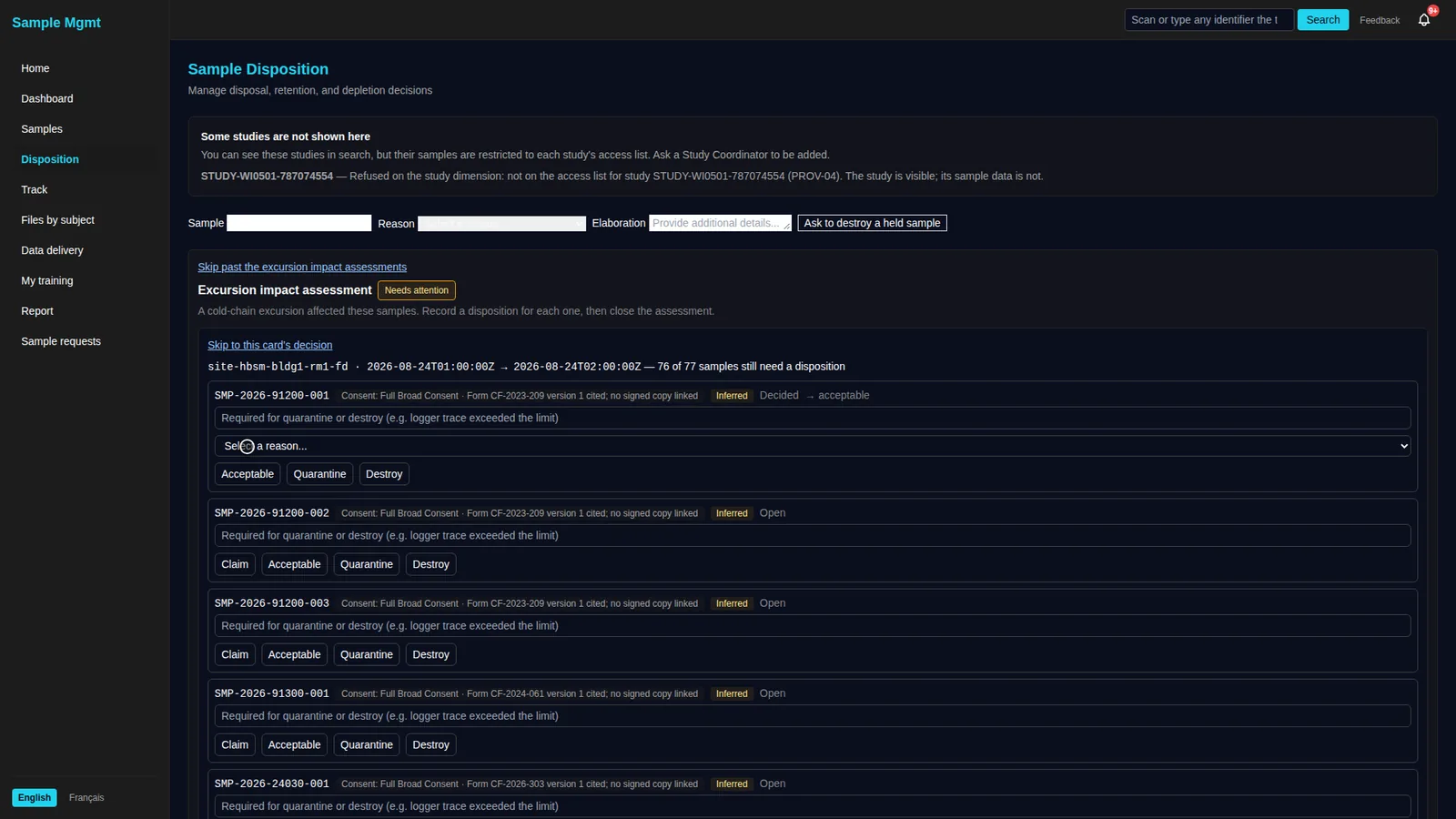
A connection is useful when its data reaches the person who acts on it. In Sample Management, a freezer excursion opens one impact item per tube that was inside, for the custodian to claim and decide.
- A condition resolves to the material it affects
- An alert is raised against the samples, not just the sensor
- The decision on each tube is recorded with its reason
A connection is configuration, and configuration is recorded
- Added on the canvas, proposed by an agent, or deployed from code
- Reviewed and approved before it goes live
- Secrets held in your key vault, never in the configuration
- Who can see each connection's data is an access right
- Every exchange records what moved, when, and from where
Bring the instruments you have
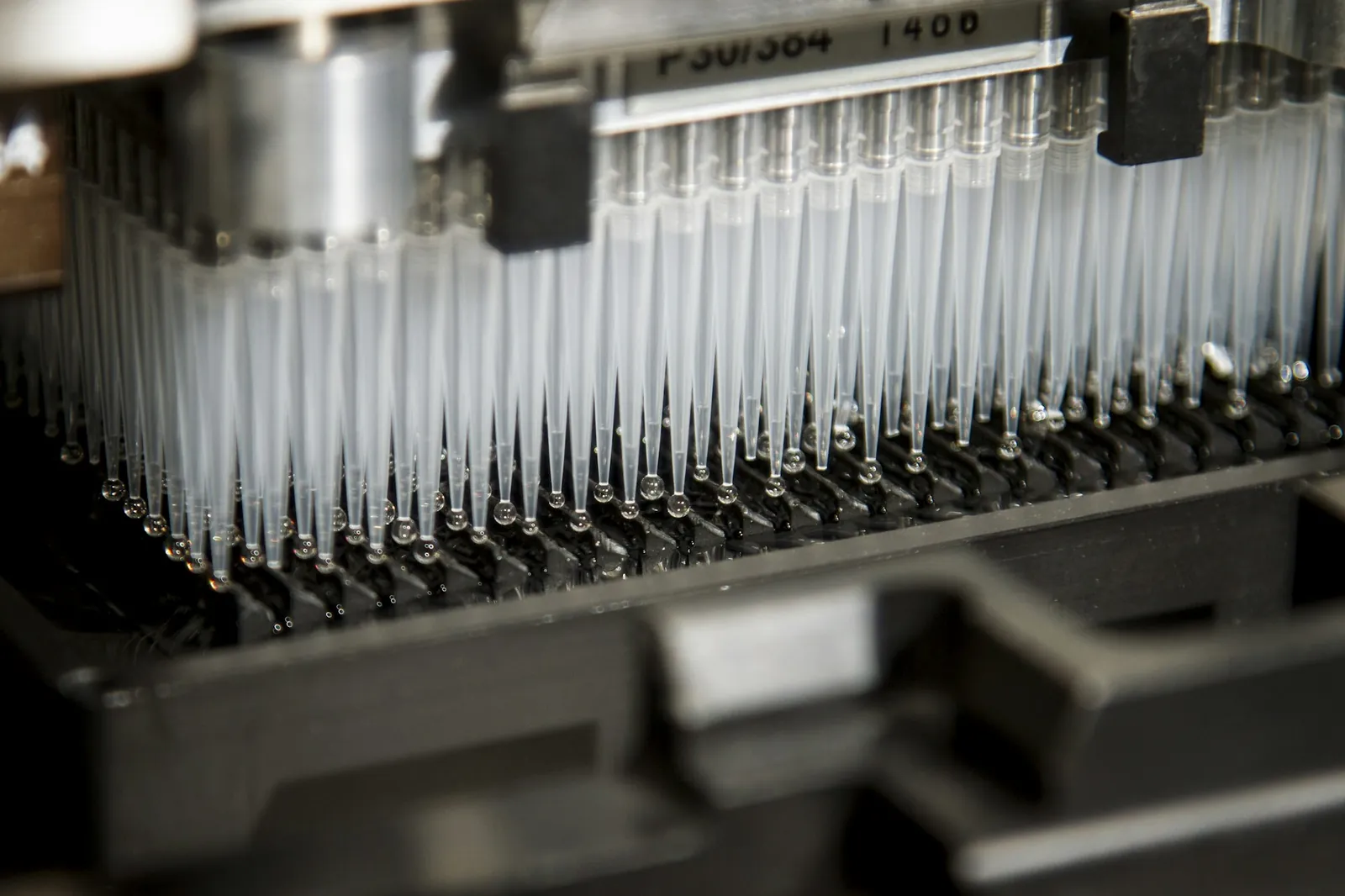
Tell us what's on your benches and in your freezers. We'll show it connected, streaming and landing on the sample record.